





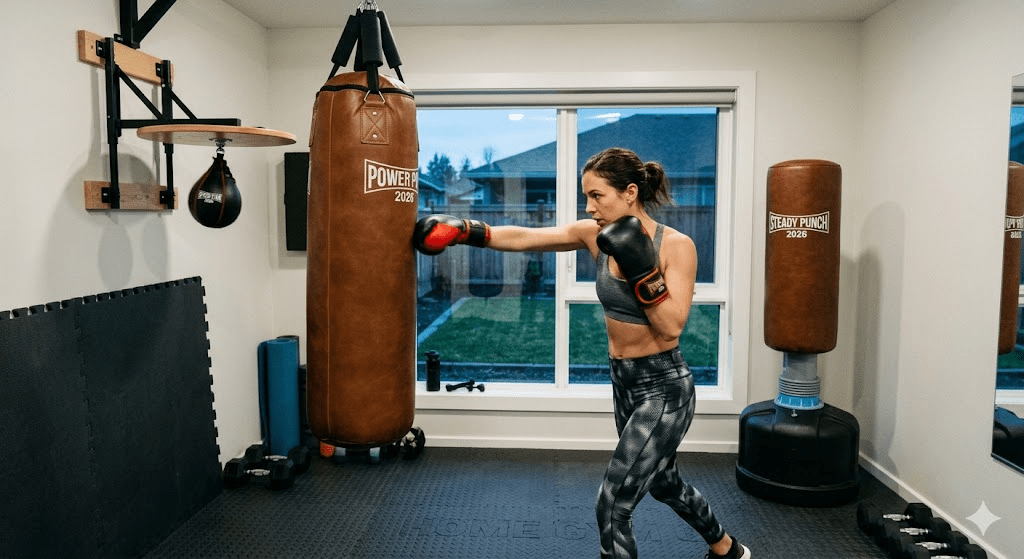

Getting a boxing bag is one of the best moves you can make for your health. You don’t need to be a pro fighter to enjoy hitting the heavy bag. It is a fantastic way to burn calories, build muscle, and let off some steam after a long day. When you use a boxing bag, you engage your core, arms, and legs all at once. This makes it a full-body workout that keeps your heart healthy. Plus, it is much more fun than running on a treadmill!
Many people worry that they don’t have enough space for gym equipment. The great news is that a boxing bag comes in many shapes and sizes. You can find one that hangs from the ceiling or one that stands on the floor. I remember when I first got my bag; I was worried about the noise. But with the right padding and gloves, it’s a smooth and satisfying experience. Whether you want to lose weight or learn self-defense, this tool is your best friend.
The Different Types of Punching Bags
Not every boxing bag is built the same way. The most common one is the heavy bag, which is long and filled with dense materials. This type is perfect for building raw power and practicing your kicks. Then, you have the speed bag. This is a small, air-filled bag that helps you develop lightning-fast reflexes and hand-eye coordination. If you want to work on your timing, the double-end bag is a great choice because it swings back at you.
If you cannot drill holes in your ceiling, a freestanding boxing bag is a life-saver. These have a heavy base filled with water or sand to keep them steady. I usually recommend these for beginners because they are easy to move around. Muay Thai bags are even longer, reaching almost to the floor so you can practice low leg kicks. Knowing which one fits your goal is the first step to success.
Quick Comparison Table
| Feature | Heavy Bag | Freestanding Bag | Speed Bag |
| Best For | Power & Strength | Convenience | Speed & Rhythm |
| Setup | Hanging Mount | Weighted Base | Wall Platform |
| Skill Level | Intermediate/Pro | Beginner | All Levels |
| Portability | Hard to move | Easy to move | Permanent |
Export to Sheets
How to Choose the Right Weight
Picking the weight of your boxing bag is very important for safety. A good rule of thumb is to choose a bag that is about half your body weight. If you weigh 150 pounds, a 70 or 80-pound boxing bag is perfect. If the bag is too light, it will swing around too much when you hit it. If it is too heavy, it might feel like hitting a brick wall, which can hurt your wrists or knuckles.
You also need to think about the filling inside. Most bags use shredded fabric or sand. Fabric-filled bags stay soft and consistent over time. Sand-filled ones can get very hard at the bottom as the sand settles. I always tell my friends to check the “give” of the bag. You want it to absorb your punch, not bounce your hand back. A well-balanced boxing bag helps you train longer without getting tired or injured.
Essential Gear for Your Boxing Bag
You should never hit a boxing bag with bare hands. Doing that is a quick way to get scrapes or even broken bones. You need a good pair of boxing gloves and hand wraps. Hand wraps are long strips of cloth that protect the tiny bones in your wrist. Even if you are just doing a light workout, always wrap your hands first. It only takes two minutes but saves you weeks of pain later.
Besides gloves, consider getting a heavy-duty hanger or a sturdy stand. If you are using a hanging boxing bag, make sure your ceiling beam can support the weight. I’ve seen people pull down parts of their garage ceiling because they didn’t use the right hardware! Also, a good pair of cross-training shoes will help you keep your grip on the floor. Proper gear makes your boxing bag sessions feel professional and safe.
Setting Up Your Training Space
Finding the right spot for your boxing bag is key to a good workout. You need enough room to move 360 degrees around the bag. This allows you to practice footwork and movement, which are just as important as punching. If you put it in a corner, you limit yourself to just standing and hitting. Try to find a space that is at least 6 feet wide so you can dance around your target.
Lighting and flooring also matter more than you think. A dark basement might make you feel sluggish, while a bright area keeps you energized. If you are training on concrete, put down some foam mats. This protects your joints when you pivot or jump. My favorite setup for a boxing bag is in a ventilated garage. The fresh air keeps you cool while you work up a sweat. A clean, dedicated space makes you want to train every day.
Basic Punches Every Beginner Should Know
Once your boxing bag is ready, it is time to start punching. The first move is the “jab.” This is a quick, straight punch with your lead hand. It is used to keep distance and set up bigger hits. Next is the “cross,” which is a powerful straight punch with your back hand. When you throw a cross, you turn your hip to get more power. These two moves are the bread and butter of any workout.
Don’t forget the hooks and uppercuts! Hooks come from the side and are great for building core strength. Uppercuts go from the bottom up and help tone your shoulders. When hitting the boxing bag, focus on “snapping” your punches. Imagine the bag is hot and you don’t want to leave your hand on it too long. This keeps your muscles lean and fast. Practice these moves slowly at first until your form feels natural.
Common Mistakes to Avoid
Many beginners make the mistake of “pushing” the boxing bag instead of hitting it. If the bag is swinging wildly in circles, you are likely pushing it with your arms. You want a crisp “pop” sound when you land a hit. Another mistake is holding your breath. It sounds silly, but many people forget to breathe when they focus hard. Exhale every time you throw a punch to keep your energy levels high.
Staying too close to the boxing bag is another common error. You want to hit the bag at the end of your reach. If you are too close, you can’t generate power and your form will get messy. Also, never look at the floor! Keep your eyes on the “head” level of the bag. I always tell beginners to treat the boxing bag like a real opponent. If you respect the bag, you will get much better results from your training.
How to Maintain Your Equipment
A high-quality boxing bag can last for many years if you take care of it. If your bag is made of leather, use a leather conditioner once in a while to keep it from cracking. If it is synthetic, a simple wipe-down with a damp cloth and mild soap works great. Sweating on your bag is normal, but leaving that sweat there can lead to bad smells or bacteria. Give it a quick clean after every session.
Check the chains and swivels regularly. The constant movement can cause metal parts to wear out or get squeaky. A little bit of oil on the swivel will keep your boxing bag moving quietly and smoothly. If you notice the filling settling at the bottom, you can sometimes roll the bag on the floor to redistribute the stuffing. Taking five minutes a month to check your gear ensures your home gym stays safe and functional.
Fun Workouts for Your Boxing Bag
To keep things exciting, try doing interval training with your boxing bag. Set a timer for three minutes of work and one minute of rest. During the work period, throw combinations like “jab-jab-cross.” In the last 30 seconds, go as fast as you can with “power shots.” This mimics a real boxing round and gets your heart rate up very fast. It is much more engaging than just hitting the bag aimlessly.
You can also incorporate bodyweight exercises. Do ten punches on the boxing bag, then drop down for five push-ups. Repeat this for ten minutes, and you will feel the burn! I like to play high-energy music to keep my rhythm steady. Some people even use apps that yell out combinations for them to follow. The goal is to keep your mind and body busy so you never get bored with your routine.
Health Benefits of Regular Boxing
Using a boxing bag is amazing for your mental health. It is a form of “moving meditation.” When you focus on the rhythm of your hits, your brain stops worrying about work or stress. It is a healthy way to release tension. Physically, it improves your bone density and coordination. Because you are constantly shifting your weight, your balance gets much better over time, which is great as you get older.
It also builds incredible confidence. Knowing you can throw a strong punch makes you feel more secure in yourself. The boxing bag doesn’t judge you; it’s just there to help you improve. I’ve seen people transform their bodies and their mindsets just by spending 20 minutes a day on the bag. It is a low-impact way to get high-impact results. Start slow, stay consistent, and you will see the changes in no time.
Conclusion
The boxing bag is more than just a piece of gym gear; it’s a tool for a better life. From picking the right weight to mastering the perfect jab, every step you take brings you closer to your fitness goals. Whether you want to look like a pro athlete or just want a fun way to stay active, boxing is the answer. Don’t wait for the “perfect” time to start. Clear a little space, grab some gloves, and start punching!
If you found this guide helpful, share it with a friend who needs a new workout. Boxing is always more fun with a partner! Remember to listen to your body and have fun with the process. You are just one workout away from a better mood and a stronger body. Get your boxing bag set up this week and feel the difference for yourself. Happy training!
Frequently Asked Questions
1. Is a hanging bag better than a freestanding one?
It depends on your space! Hanging bags feel more realistic but require a strong ceiling mount. Freestanding bags are better for apartments and are easier to move.
2. Do I really need hand wraps for a boxing bag?
Yes! Hand wraps protect your wrists and knuckles from injury. Even if you aren’t hitting hard, the repeated impact can cause damage over time without protection.
3. What size gloves should I use?
For most people, 12oz or 14oz gloves are perfect for training on a boxing bag. They provide enough padding to keep your hands safe while you build strength.
4. How often should I train on the bag?
Starting with 2–3 times a week is great. This gives your muscles and joints time to recover. As you get stronger, you can increase your sessions.
5. Can kids use a boxing bag?
Absolutely! There are smaller, lighter bags made specifically for children. It is a great way for kids to build confidence and stay active.
6. Will hitting a bag make me bulky?
Not necessarily. Boxing is mostly a cardio and endurance workout. It tones your muscles and burns fat, giving you a lean and fit look rather than a bulky one.