





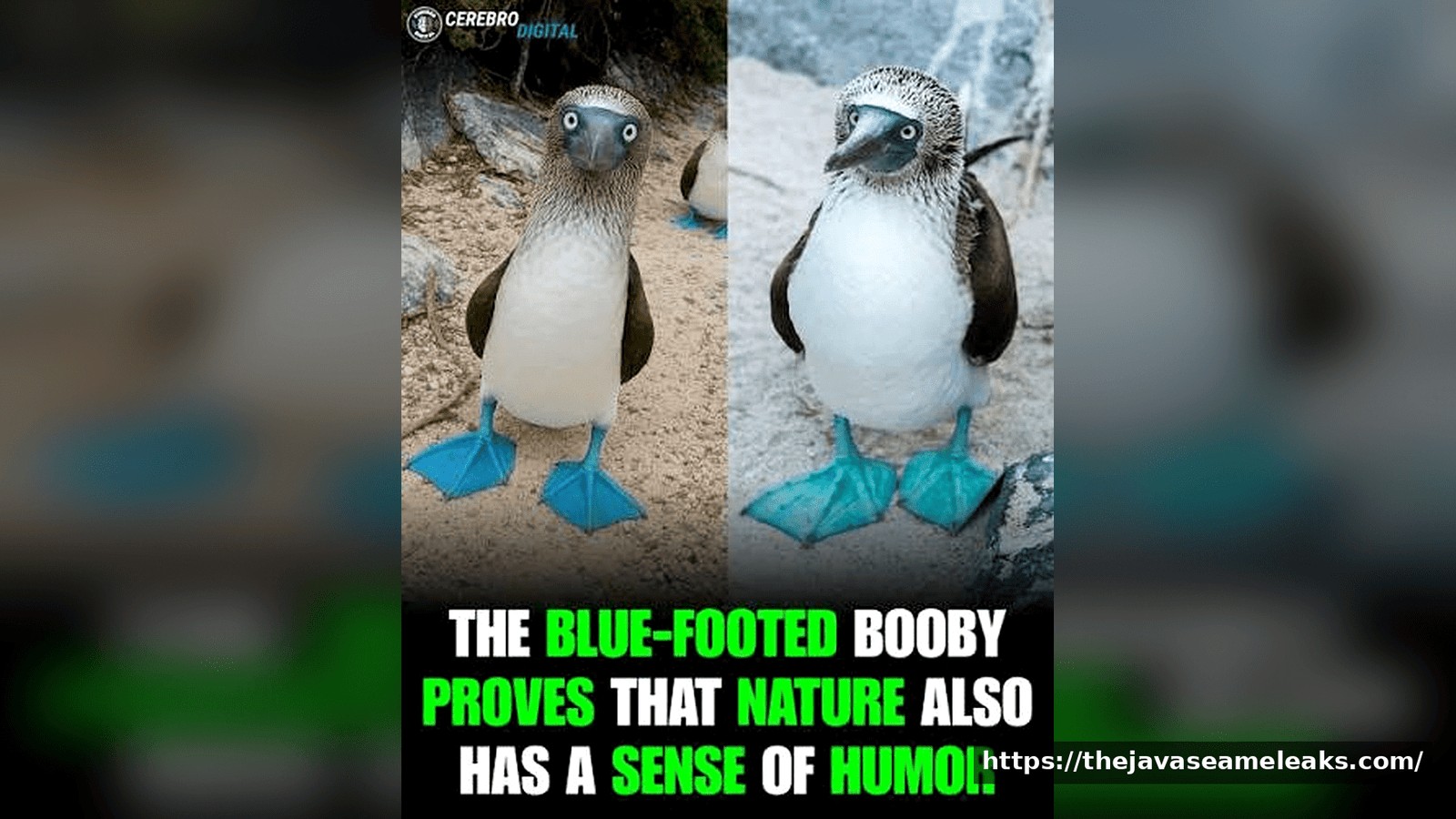

Have you ever seen a bird that looks like it walked straight out of a cartoon? The bluefoot bird, officially known as the blue-footed booby, is exactly that. Its most striking feature is, of course, its bright blue feet. These birds are a favorite for wildlife lovers, especially those visiting the Galapagos Islands. They have a funny, clumsy walk on land. But in the water, they are expert hunters. They are also famous for their elaborate mating dance. It’s one of the most unique shows in nature. In this guide, we’ll explore everything that makes the bluefoot bird special.
The name “booby” actually comes from the Spanish word “bobo” . This means “stupid” or “clown” . Early sailors named them this because they were so tame. The birds had no fear of humans. This made them easy to catch. But this behavior is not stupid. It shows they had few natural predators. Today, we know them as smart, fascinating seabirds. Their charm lies in their trusting nature. They seem to be showing off their most prized possession: their blue feet.
The Story Behind the Name
The name of the bluefoot bird is certainly unusual. For a long time, people thought these birds were foolish. The Spanish word “bobo” means foolish or clownish . This stuck as their common name. It refers to their clumsiness on land. They also showed no fear of people . Early sailors could easily walk up and take them for food. They thought the birds lacked intelligence.
However, their other name, “booby,” has stuck for centuries. Today, we know the name is misleading. These birds are not silly at all. They are very capable hunters. They have excellent eyesight and are built for speed. Their reputation for stupidity is just a case of mistaken identity. Their confidence around humans is actually an endearing trait .
Why Are the Feet So Blue?
This is the most common question about the bluefoot bird. The secret lies in their diet. They mainly eat small fish like sardines and anchovies . These fish contain pigments called carotenoids . When the bird digests the fish, it absorbs these pigments. The pigments are then deposited in the skin of its feet. This turns the feet a brilliant blue.
The color of a bluefoot bird’s feet is a health indicator. A bird with brighter, more vivid feet is usually healthier . This means they are good at finding food. Young birds start with grey feet. As they eat more fish, their feet turn blue. The vibrant blue is a sign of strength and a good diet. This is a key part of their attraction to potential mates .
The Bluefoot Bird Mating Dance
The mating dance of the bluefoot bird is a true spectacle. It is one of the most entertaining animal rituals to watch. When a male wants to attract a female, he shows off his blue feet. He will strut around her proudly. The dance involves him lifting one bright blue foot up high, then the other. He will also point his beak up to the sky. This is called “sky-pointing” . He makes a high-pitched whistle while doing this.
Why does he do this? The female pays close attention to his feet. She looks for the bluest feet she can find. This tells her he is fit and healthy. A male with bright feet shows he can find enough food. It means he is likely to be a good father. The brighter the blue, the better the chance he will get a mate. This dance is all about “look at my feet!” .
Where Does the Bluefoot Bird Live?
The bluefoot bird lives in a specific part of the world. It is native to the eastern Pacific Ocean. You can find them from the Gulf of California in Mexico down to the coast of Peru . They prefer tropical and subtropical climates. They love islands and coastal areas with rocky shores.
The most famous place to see these birds is the Galapagos Islands . About half of all breeding pairs nest there . They are a big tourist attraction there. You might occasionally see one in the United States. They sometimes wander inland to places like Arizona . But this is rare. They are true seabirds. They rely on the ocean for all their food.
A Life of Hunting and Diving
The bluefoot bird is a master hunter. They are built for diving. They scan the water from high up in the air. They can spot fish from over 80 feet in the air . Once they spot a school of fish, they fold their wings back. They become a streamlined missile. They plunge into the water at breakneck speed.
They also have special adaptations for diving. Their nostrils are permanently closed . This stops water from getting in when they hit the surface. They can swim underwater to catch their prey. Female birds are larger than males. This allows them to dive deeper. They can catch bigger fish. Males, being smaller, hunt in shallower water. This helps them avoid competing for the same food .
The Diet of the Bluefoot Bird
The bluefoot bird is a picky eater. Its diet mainly consists of fish. They love sardines, anchovies, and mackerel . They may also eat squid. They rely on these fish for their survival. The fish they eat are also what keep their feet blue. Without these fish, they cannot get the pigments they need.
These birds are smart hunters. They often hunt in groups. When one bird spots a fish, it signals to the others. They all dive together. This makes it harder for the fish to escape. They prefer to hunt early in the morning or late in the afternoon. This is a smart strategy. It helps them avoid predators like frigatebirds .
Family Life and Parenting
The bluefoot bird is a dedicated parent. They are monogamous. This means they usually mate for life. The female lays one to three eggs on the ground . They don’t build complex nests. They just make a small hollow in the dirt.
Both parents take turns incubating the eggs. They use their webbed feet to keep the eggs warm. This takes about 41 days . When the chicks hatch, they are very vulnerable. The mother keeps them warm under her feet. The father brings back food. This is a big job. He will regurgitate fish to feed the chicks . If food is scarce, they may only feed the biggest chick. This ensures at least one survives. This is called siblicide, but it’s nature’s way of dealing with hard times .
Conservation Status
The future of the bluefoot bird is a growing concern. They are currently not endangered. The IUCN lists them as a species of “Least Concern” . They have a wide range. However, their numbers are decreasing in some areas.
The biggest threat is food shortage. They rely heavily on sardines. Overfishing and climate change can reduce these fish stocks. In the Galapagos, a drop in sardine numbers is a big problem . This leads to fewer chicks surviving. Their population can decline rapidly. If we want to keep seeing this bird, we need to protect their food sources. This means responsible fishing and fighting climate change. Conservation efforts are key to their survival .
Bluefoot Bird Fun Facts
The bluefoot bird is full of surprises. Here are some fun facts about them:
- Built for Diving: They have no external nostrils. This helps them when diving into the water at high speeds .
- Staying Cool: To cool down, they sometimes poop on their own feet! It sounds gross, but the evaporation helps them cool off .
- Long Life: They can live for a long time. The average lifespan is about 17 years. They can live even longer in captivity .
- Not Born Blue: Chicks are not born with blue feet. The feet are white or grey at birth. They turn blue as they grow up and eat more fish .
The Future of the Bluefoot Bird
The story of the bluefoot bird is a mix of wonder and warning. They are currently holding on. They are an iconic symbol of wildlife. But they are sensitive to changes in the ocean. Their declining numbers in some places are a red flag.
Their survival depends on our actions. We need to protect their habitat. This includes keeping our oceans clean and fish stocks healthy. Tourism can be a good thing. It helps people see these birds. This builds support for protecting them. By caring for the bluefoot bird, we also care for the entire ecosystem they depend on. It’s our responsibility to ensure this amazing bird continues to dance for generations to come .
Frequently Asked Questions
1. What is the bluefoot bird?
The bluefoot bird is a seabird famous for its bright blue feet. It is native to the eastern Pacific Ocean and is closely related to other boobies and gannets .
2. Why is the bluefoot bird called a booby?
The name “booby” comes from the Spanish word “bobo,” meaning foolish. Early sailors named them this because the birds were clumsy on land and unafraid of people .
3. Why does the bluefoot bird have blue feet?
The blue color comes from the fish they eat. The fish contain pigments called carotenoids, which deposit in the bird’s feet and turn them blue. Brighter feet indicate a healthier bird .
4. Is the bluefoot bird endangered?
Currently, they are listed as a species of least concern. However, their population is declining in some areas, mainly due to food shortages .
5. What is the blue-footed booby’s mating dance?
The male performs a dance to show off his blue feet. He struts around, lifts his feet high, points his beak to the sky, and whistles .
6. Where does the bluefoot bird live?
They live along the Pacific coast from Mexico down to Peru. The most famous population is on the Galapagos Islands .
Conclusion
The bluefoot bird, or blue-footed booby, is truly a treasure of the natural world. Its bright blue feet are a sign of its health and strength. From its hilarious dance to its expert diving skills, it never fails to impress. This bird is a perfect example of the wonders of evolution. It shows us how nature can be both beautiful and functional.
Are you fascinated by the bluefoot bird? Plan a trip to the Galapagos to see them in person. You can also support organizations that work to protect the ocean. Learn more about this amazing bird and share your knowledge. Every effort helps! Leave a comment below and tell us what you find most interesting about the blue-footed booby.