




Turtles are some of the most fascinating creatures on our planet. They have been around since the time of the dinosaurs . Today, people everywhere love looking at turtle pictures. These images show us a world of beauty and calm. Whether it is a sea turtle gliding through the ocean or a cute turtle sitting on the grass, these photos capture our hearts.
Taking good turtle pictures is an art. It requires patience, skill, and respect for the animal. Many people want to know how to get the perfect shot. Others simply enjoy looking at these ancient reptiles. This guide will explore everything about turtle pictures. We will look at different species, share expert tips, and discuss why these animals are so special.
You will learn how to take amazing photos yourself. You will also discover where to find the best images. We will cover both professional photography and fun, colorful illustrations. Get ready to dive into the wonderful world of turtle pictures.
Why Are We So Drawn to Turtle Pictures?
There is something magical about turtles. They move with a sense of grace and calm. When we see turtle pictures, we feel relaxed. The slow, steady pace of a turtle reminds us to slow down too. This is why so many people love to look at turtle pictures on social media and in art.
Turtles are also very ancient. They have survived for millions of years. Seeing turtle pictures connects us to a world long ago. It makes us think about nature and our place in it. Scientists call them “charismatic” animals . This means people naturally like them and want to learn more about them. Because of this interest, turtle pictures are very popular in photography, education, and art.
We also see turtle pictures in children’s books and animations. The cute and playful look of a turtle is perfect for kids’ drawings . These images help teach children about wildlife in a fun way. Colorful turtle pictures in books make learning exciting. They spark curiosity about the natural world.
Types of Turtles You See in Turtle Pictures
There are many different turtles in the world. Each one looks unique. When you search for turtle pictures, you will see a huge variety. Some live in the ocean, and others live on land. Knowing the type helps you appreciate the photo more. It also helps you learn about their different lives.
Here is a helpful table that shows some common turtles you might see in turtle pictures:
| Turtle Type | Main Habitat | Key Feature in Pictures | Common Species |
| Sea Turtles | Ocean | Graceful swimming, large flippers | Green, Hawksbill, Loggerhead |
| Box Turtles | Land/Forests | High-domed shell, colorful patterns | Eastern Box Turtle, Yellow-headed Box Turtle |
| Softshell Turtles | Freshwater | Flat, leathery shell, snorkel-like nose | Spiny Softshell, Florida Softshell |
| Snapping Turtles | Freshwater | Powerful jaws, spiked tail | Common Snapping Turtle, Alligator Snapping Turtle |
| Mud & Musk Turtles | Freshwater | Small size, dark shells | Eastern Mud Turtle, Common Musk Turtle |
| Giant Tortoises | Land (Islands) | Huge size, thick legs | Galapagos Tortoise, Aldabra Giant Tortoise |
The most common subjects in photography are sea turtles . Species like the Hawksbill and Green turtle are favorites. Hawksbills are “reef turtles” that eat sponges. Green turtles feed on seagrass and sleep on reefs . Both types offer different opportunities for turtle pictures.
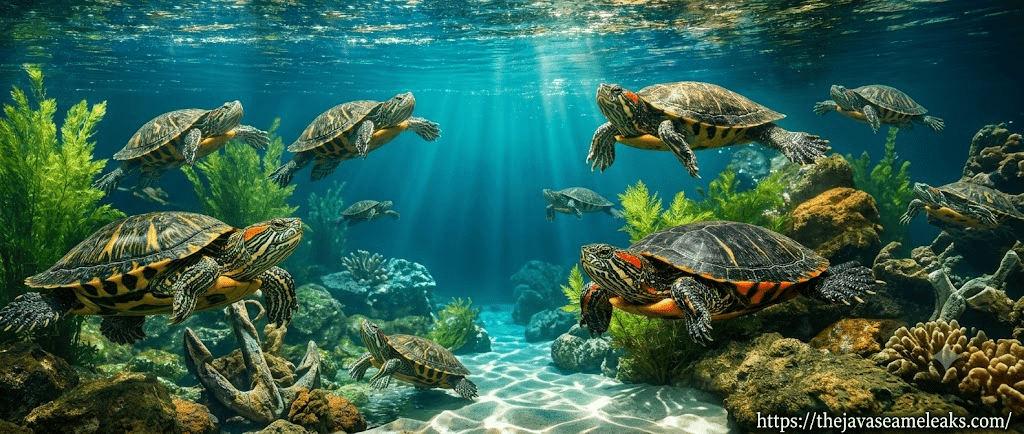
Freshwater turtles like the red-eared slider are also popular. Many people keep them as pets. This makes them a common subject for turtle pictures at home. Land tortoises are also fascinating. Their large, heavy shells make for impressive photos in the wild or in zoos.
Expert Tips for Taking Amazing Turtle Pictures
Taking great turtle pictures takes more than luck. It requires skill and the right approach. Professional photographers like Alex Mustard share many tips . The most important rule is to be respectful. Turtles are wild animals, and we must not stress them .
Here are the top tips for getting your best turtle pictures:
- Approach Slowly: Never chase a turtle. They can swim fast if scared . Move slowly and use a zigzag path. This is less threatening to the animal .
- Avoid Eye Contact: Direct eye contact can frighten a turtle. They prefer it if you don’t stare them down . Look away slightly as you get closer.
- Reduce Strobe Power: Turtles have light faces and bellies. These reflect a lot of light. Turn your strobe power down a few clicks. This prevents the face from looking too white or “blown out” .
- Get the Right Angle: Try to shoot from slightly below the turtle. This gives a view of the blue water behind it . For green turtles, a top-down shot can show off their beautiful shell pattern .
- Be Patient: Wait for the turtle to relax. A relaxed turtle looks better in photos. It will have its flippers hanging down or moving smoothly .
You must also think about the background. A busy reef can ruin a photo. Try to place the turtle against a nice blue background. This makes the subject stand out . You can also use a colorful object in the foreground. Just make sure the background water looks clean and inviting .
Understanding Different Species for Better Turtle Pictures
To get great turtle pictures, you need to know your subject. Green turtles and Hawksbill turtles look very different. They also act differently. A good photographer knows how to spot these differences. This helps them plan the perfect shot .
Hawksbill turtles are reef dwellers. They feed on sponges and soft corals . If you see one eating, you can get very close. They are focused on their food and ignore you . This gives you a great chance for close-up turtle pictures.
Green turtles are vegetarians. They eat seagrass and seaweed . They often rest on reefs. This makes them good for portraits. They have very characterful faces and expressive eyes . If you have a macro lens, it is perfect for this shot.
A classic and award-winning shot is a top-down view of a green turtle . It looks beautiful against the deep blue water. You need a non-fisheye wide-angle lens for this shot. The background and the clean shell are key to this iconic turtle picture.
The Magic of Colorful Turtle Pictures
While wildlife photos are stunning, colorful turtle pictures have a special charm. These images often feature bright blues, greens, purples, and yellows . They look playful and artistic. This style is very popular in illustrations and children’s books .
Colorful turtle pictures are not just for fun. They are also great for education. A bright, eye-catching image can help kids learn about animals. It makes the lesson more engaging. These images can teach children about reptiles, conservation, and art .
You can find colorful turtle pictures in many places. They are used in educational materials, coloring books, and digital designs. The bright colors make the turtles look friendly and approachable. This helps build a positive connection to nature. It makes the idea of protecting turtles more appealing to a young audience.
These pictures also celebrate the beauty of nature. The patterns on a turtle’s shell are beautiful. When an artist uses vibrant colors, they highlight this natural art. It transforms a real animal into a piece of art. This type of turtle picture is a celebration of creativity and wildlife.
Where to Find High-Quality Turtle Pictures
There are many places to find amazing turtle pictures. Whether you are a photographer looking for inspiration or someone who just loves turtles, you have options. The internet is full of resources. Stock photo websites have a huge collection. You can find professional shots of sea turtles, tortoises, and more.
For underwater photography, look at diving magazines. Websites like Divernet and Scuba Diving magazine have expert guides. They often feature galleries of stunning turtle pictures from around the world . These are great examples to learn from.
Educational sites are also a good source. The Smithsonian Magazine Photo Contest often features wildlife images, including turtle pictures . These photos are high quality and tell a story. They often highlight conservation issues, which adds depth to the image.
If you want something more artistic, check out design platforms. Sites like Creative Fabrica sell colorful turtle pictures. These are perfect for digital art, crafts, or commercial use . You can find illustrations, cartoons, and patterns. These images are playful and creative.
Turtle Pictures and Their Role in Conservation
Turtle pictures do more than just look pretty. They play a big role in conservation. Seeing a beautiful image of a turtle can make people care. It builds an emotional connection to the animal. When we see a cute turtle picture, we want to protect it.
Many turtles are endangered. All seven species of sea turtles are endangered or critically endangered . Their habitats are threatened by pollution and climate change. Sharing turtle pictures helps spread awareness. It shows people what is at risk.
A powerful photo can inspire action. It can encourage people to support conservation efforts. It can also teach others how to behave around turtles. For instance, photographers share tips on how to take turtle pictures without stressing the animals. This helps protect the turtles while still allowing for great shots .
By supporting organizations that use turtle pictures, you can help. Buying a photo book or supporting a wildlife charity makes a difference. Turtle pictures are a powerful tool for education and advocacy. They speak a language that everyone can understand: beauty and the need to protect it.
Conclusion
Turtle pictures offer us a window into an ancient and beautiful world. From the graceful sea turtle swimming in the ocean to the colorful illustrations in a child’s book, these images inspire us. They teach us about nature, patience, and the importance of conservation. Learning to take good turtle pictures takes time and respect for the animal. But the results are worth it. Every photo tells a story and helps us appreciate these incredible creatures even more.
Now that you have learned all about turtle pictures, we want to hear from you! What is your favorite type of turtle picture? Do you have a tip for taking great photos? Share your thoughts and experiences in the comments below. Don’t forget to share this article with fellow turtle lovers!
Frequently Asked Questions (FAQs)
1. What are the best cameras for taking turtle pictures?
For underwater shots, a camera with a good wide-angle lens is key. Many pros use DSLR or mirrorless cameras in waterproof housings. For macro shots of faces, a 105mm lens is great . If you are a beginner, a good waterproof action camera can also take nice turtle pictures.
2. Is it hard to take turtle pictures underwater?
Yes, it can be challenging. You need to be a good diver first. You must approach the turtle slowly and without chasing it . You also have to manage your camera settings and strobes to avoid overexposing the turtle’s face . Patience and practice are key.
3. Why are sea turtles so popular in turtle pictures?
Sea turtles are very photogenic. They are graceful and swim in beautiful, clear water . They are also quite curious, which allows photographers to get close. Their ancient look and endangered status make them a compelling subject for turtle pictures.
4. Can I take turtle pictures with my smartphone?
You can take pictures of turtles on land with a smartphone. However, underwater photography requires a special housing for your phone. The quality of underwater turtle pictures from a phone is often limited compared to a dedicated camera.
5. How can I find free turtle pictures for a project?
Many websites offer free stock photos. Search for images that are labeled for reuse. However, be sure to check the license terms. For educational projects, you can sometimes use images under “fair use.” Always credit the photographer if you can.
6. How do turtle pictures help with conservation?
Turtle pictures raise awareness about these animals. They make people care about turtles and their habitats . Beautiful images can inspire people to support conservation efforts. They also teach people how to behave responsibly around wildlife.